Event
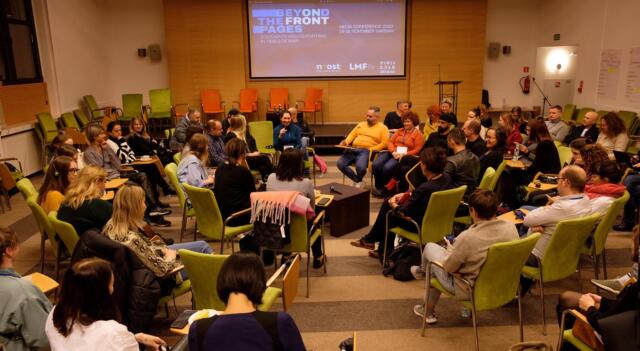
Conversation with snacks and drinks on 03 June 2026, 6-8 pm
Location: n-ost media hub, Erkelenzdamm 59-61, Portal 1b, 10999 Berlin
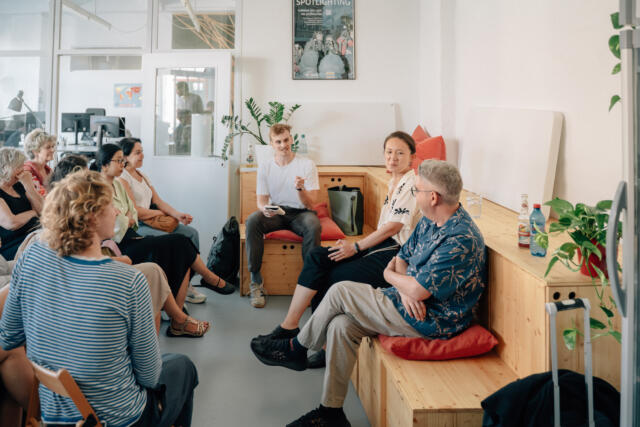
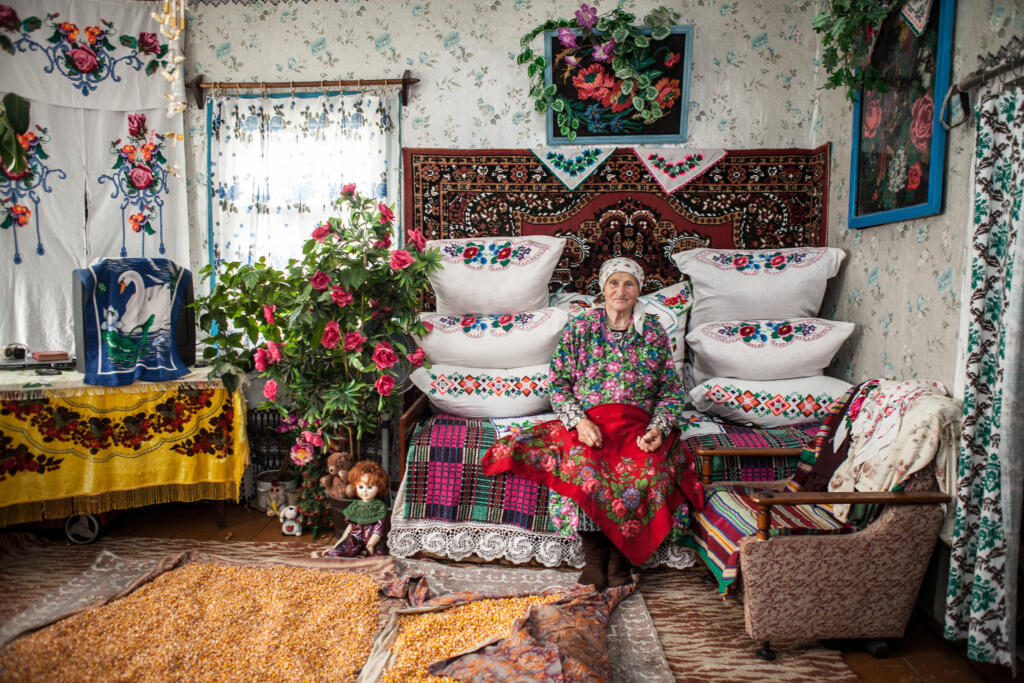
Join us for a conversation with award-winning Belarusian documentary photographer Andrei Liankevich, whose project Traditional interior documents the domestic spaces of rural Belarusian village life. In conversation with essayist, visual artist and curator Olga Bubich, we will discuss collective memory and how images function as both archive and testimony.
Together, we'll ask: What makes an interior an archive, and what is lost when they disappear? What can documentary photography show that written reporting cannot? And what does this kind of work change for the people photographed, for the audiences who see it, or for the culture it tries to preserve?
Join our discussion with
Andrei Liankevich (documentary photographer)
Olga Bubich (essayist & researcher)
Moderated by Lina Weisener (n-ost)
Background and context
Documentary photography is a form of journalism, and images have a language of their own, one capable of capturing what resists being put into words and moving through spaces inaccessible to written reporting.
Over the past 60 years, Belarus has undergone rapid urbanisation that has reshaped its demographic and cultural landscape. Today only a quarter of the population lives in the countryside and many villages are either depopulated or abandoned entirely. The traditional Belarusian village is disappearing, and with it a visual culture shaped by Soviet collectivisation, wartime devastation and the upheavals of the post-Soviet decades.
The Traditional Interior series grew from an observation Andrei Liankevich first made a decade earlier while working on his book Pagan: that the colours, texture and domestic detail of village life were vanishing from view. As the older generation passes away, houses are cleared and renovated. The family photographs, embroidered towels and painted carpets come down.
The project is rooted in personal memory and childhood. That combination of the intimate and the documentary, the personal and the collective, is what gives the images their weight. After all, to photograph what is quietly disappearing is to insist on its importance.
Cross-border and multiperspective reporting in your inbox
A monthly overview of project news, selected queer stories and job opportunities. At the moment focused on History Unit, a project about the persecution of queer people under National Socialism and today.

A daily roundup of European media debates, available in English, German, French, Russian, and Turkish.

The Eurasian Climate Brief is a podcast focusing on climate news in the region stretching from Eastern Europe, Russia down to the Caucasus and Central Asia.

Weekly insights on the war against Ukraine discussed in European media, debunking disinformation, and spotlighting key narratives and voices from Ukraine.

Communicating Climate in Central Asia curated this newsletter. A monthly newsletter dedicated to strengthening climate journalism and communication across EECCA region.