Featured Article
Ukraine’s evolution over ten years of war
Published on Oct 31, 2024
Ukrainian article of the week published in the 51th edition of the "What about Ukraine" newsletter on October 24th, 2024. The article was written by Alona Yaholnyk, Yehor Ukleyin and Andryi Vynogradov for Ukrainer Media and was translated for n-ost by Tetiana Evloeva. Find the original article in Ukrainian here.
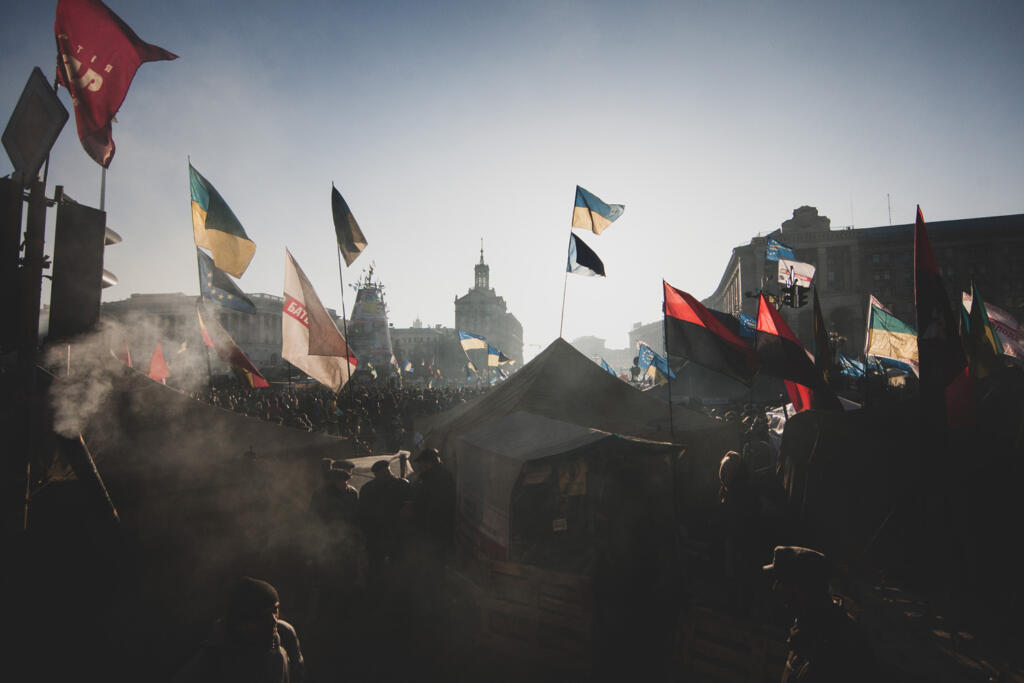
For many Ukrainians, 2014 was the turning point that prompted a rapid change in their country and their lives. The Revolution of Dignity managed to overthrow Russian-leaning president Yanukovych’s regime and put a stop to its destructive decision-making. In the same year, Russia seized Crimea and waged war in eastern Ukraine. For over ten years, Ukraine has been resisting Russian aggression in its numerous shapes and forms. Ukraine entered this war in a hugely complicated political, economic and social situation, and probably looked like an easy target for the aggressor. Despite continuous conflict with a powerful enemy, we have preserved our statehood and our ability to fight back and gained experience in liberating parts of our territory.
Ten years ago, the vision of the future of Ukraine was significantly different from the one we have in 2024. Many of our politicians had pro-Russian views, and their decision-making was based on our dependence on the Russian Federation. Back then, most Ukrainian citizens were just beginning to rediscover their identity and working on a common stance, which meant learning more about the role of language and national culture. We were trying to comprehend our legacy of coexistence with the empire and its imprint on our consciousness.
Outside of these challenges, Ukraine spent the past ten years carrying out a number of reforms and forging collaborative relations in a variety of fields. While the pace, focus and quality of those actions may remain a matter of debate, the country has progressed during this difficult time. In recent years, the State has asserted its agency in the eyes of the international community and gained support from international partners. At the same time, the Ukrainian economy, politics, culture and military have finally been rid of Russian influence. In this piece, we show the key changes in the State and Ukrainian society between 2014 and February 2024.
The military: strength under fire
A reformed and stronger Ukrainian army is an important achievement of the past decade. When you are neighbours with a terrorist state, it is your defence capacity that makes the basis for your survival and reforms. Since 2014, the Ukrainian Army has undergone perhaps the most dramatic change, both quantitative and qualitative, in its modern history.
In 2013, a number of military experts backed up by servicepeople pointed out weaknesses in the Armed Forces of Ukraine (AFU), including a lack of financing, a legacy of Soviet standards, an urgent need to update technologies, and insufficient social support for the soldiers. Russia’s military occupation of several parts of Ukraine’s territory, where they harvested weapons, military equipment, and other resources for their further advancement in the war, also undermined the capacity of the Ukrainian Army.
Under these dire circumstances, the Ukrainian Army managed to muster its strength, with some people responding to the draft call while others volunteered to become soldiers. Still, there was another group who, working as volunteers, took it upon themselves to supply the army with food, arms, equipment and camouflage nets. Along with local charitable initiatives and fundraisers, organisations and funds arose to support the military systematically. Those were the likes of Come Back Alive, Army SOS, Motohelp, Zgraya and others. The experience gained back then became an important asset after the Russian Federation waged a full-scale war in 2022: Ukrainians had some understanding of how to set up an aid system, charitable organisations had grown their own communities, and the culture of donations and charitable work scaled up.
Launching the transformative change of the Ukrainian Defence Forces was the military reform, which kickstarted in 2014. Its goal was to withdraw from the Soviet legacy, improve the country’s defence using NATO principles and standards, and increase the efficiency of the planning and resource management system.
Training military personnel: following NATO standards
In the 1990s, Ukraine took part in a number of international military drills. Since 2014, Ukraine has intensified joint military drills with the armies of NATO member states like the USA, Poland, Romania, Turkey, Italy and others. Among them, special significance in terms of scale and the number of troops trained in Operation Orbital, where British instructors have trained over 22,000 Ukrainian servicemen between 2014 and 2022. In Summer 2022, Operation Orbital was relocated to the UK, to complete the training, despite the full-scale invasion.
Following the lead of British instructors, military personnel from New Zealand, the Netherlands, Canada and other countries also relocated their training facilities for Ukrainian soldiers. In place until 2026 is Operation Unifies, where the Canadian Armed Forces organise boot camps for the Ukrainian military after the initial stages of the war. This operation is an integral part of a multinational joint commission that came together to reform the Ukrainian Army.
Boosting forces in the army
Since 2004, the Ukrainian Army has had three types of troops: the Ground Force, the Air Force, and the Navy. The latest reform brought along several more types of military, namely Special Operations Forces, Highly Mobile Air Assault Forces (re-branded as Air Assault Forces in November 2017), and Territorial Defence Forces.
Additionally, almost two dozen combat brigades were formed, along with new regiments, battalions, and units of operational, combat, rear and technical support. The number of troops rapidly increased to 250,000 before the full-scale invasion, and reached 700,000 after February 2022. In January 2024, according to a statement by Volodymyr Zelensky in his interview for the German TV broadcaster ADR, the Ukrainian Army numbered 880,000 soldiers, both male and female.
Compared to 2014, the number of women in the army has also increased. According to the Personnel Centre of the Armed Forces of Ukraine, as of October 2023, the number of female soldiers in combat positions also increased.
Domestic production of weapons: on the up
Over the past ten years, Ukraine designed and produced a number of new types of weapons and equipment that the country’s defenders use alongside foreign supplies. Below are some examples of what can be made public:
In 2009, a Ukrainian company Research and Manufacturing Association Praktyka launched the production of the Kozak armoured personnel carrier (as of today, several models are available) later fielded to the AFU, the National Guard and the State Border Guard Service. The vehicle boasts high mobility and armour against 7.62 calibre bullets. It also offers the option of mounting a variety of weapons, making the machine more versatile in combat.
Leleka–100, an unmanned aerial vehicle (UAV) by Ukrainian company Derivo, also has several modifications. Its advantages include handiness, affordability and efficiency in combat.
Ukrainian 2S22 Bohdana is a 155 mm NATO-standard self-propelled howitzer. Its prototype was first introduced on 14 July 2018, and its trial by fire was held during the liberation of the Zmiinyi Island (Snake Island) in 2022, where it was deployed alongside the weaponry from the Western partners to strike the enemy forces. In early 2023, Ukraine obtained financing to launch a serial production of updated models of Bohdana.
Rearming Ukraine: spearheading innovation
Innovations and changes in combat tactics have required new modern weapons. For instance, in 2018, the USA sold 37 Javelin launch units and 200 missiles to Ukraine. The following year, they sold a further ten launch units and 150 missiles.
After the full-scale war began, more and more Javelins were fielded for the AFU. Also in high demand were the Swedish-British NLAW anti-tank guided missile systems and man-portable air-defence systems (MANPADS) such as the FIM-92 Stinger. Further on, Ukraine needed other types of weapons, like artillery and armoured vehicles. In May 2022, the USA, Canada and Australia supplied the AFU with about a hundred M777, a move that ultimately helped the Ukrainian howitzers repel the offensive of the Russian troops in the Donetsk region.
Another important shipment in this full-scale war was the M142 High Mobility Artillery Rocket System (HIMARS), allowing the Ukrainians to destroy large concentrations of invaders and ammo warehouses in the remote areas of the frontline, and even in the Russians’ rear. Also, as of July 2023, Ukraine received dozens of Leopard tanks of various modifications from the allies. Those tanks are known for their advantages in armour, manoeuvrability and fire direction systems.
Ukraine was also given arms for air defence, like NASAMS, IRIS-T and MIM-104 Patriot surface-to-air missile (SAM) systems that have proven to successfully shoot down not just cruise missiles, but ballistic missiles as well, under conditions that were sometimes unprecedented in the confrontation between Russian and Western weapons. That transfer strengthened the Ukrainian Air Defence Forces (ADF), which in the early days of the full-scale invasion were only able to shoot down 18 percent of cruise missiles at most.
International relations: closer to EU sphere
Before Ukraine followed a course towards the EU, the country had been closely associated with Russia in a variety of spheres. Over time, the desire of Ukrainians for more independence and European integration led to Ukraine’s gradual departure from Russia. That process only intensified after Russia’s initial aggression in 2014.
The EU association agreement: rekindled
Preparation for signing the EU Association Agreement, which was the most important international statutory instrument in the entire history of Ukraine, had been in the works since 2007. Over the following years, the parties held a number of meetings, and the process was successfully completed in Autumn 2013. However, several days before signing the document, the then Ukrainian Government, along with President Viktor Yanukovych, put the process on hold, announcing that no documents with the EU would be signed.
After 2013-2014’s Revolution of Dignity and the then-President fleeing the country, the process of signing the EU Association Agreement was re-kindled. In the Spring of 2014, the parties signed the political association and economic integration parts of the agreement, which were ratified by the Ukrainian Parliament on 16 September of that same year. As of March 2023, Ukraine has fulfilled 72 percent of all obligations under the agreement. According to Olha Stefanyshyna, then deputy prime minister for European and Euro-Atlantic integration of Ukraine, the process of adapting Ukrainian legislation to EU standards has been ongoing despite the full-scale war.
Visa waiver agreements with EU: opening
Adopted in late 2016, the visa-free regime with the EU became the next step towards cooperation between Ukraine and the EU. This policy allowed Ukrainians short-term travels (under 90 days) to the EU member-states without requiring a visa.
Despite the full-scale war, in 2024, Ukraine’s international passport was ranked 32nd in the Harley Passport Index, due to our country being in the top five countries with the most improved rankings over the past ten years.
EU candidate status: verified
On 28 February 2022, the European community in general and the European Commission President Ursula von der Leyen in person supported Ukraine’s accession to the EU, and in April, the Ukrainian Government was sent a questionnaire to work on.
Two months later, the European Commission issued its opinion on the application for EU membership, recommending Ukraine as a potential candidate state. To keep this status, Ukraine was required to implement a number of reforms, namely Constitutional Court reform, judicial reform, anti-oligarchy reform, police reform, anti-corruption measures and adopting legislation on the media and national minorities (communities). Ukraine is still implementing some of these changes. As of November 2023, experts from the European Commission shared their belief that Ukraine had implemented four out of seven steps needed for membership talks.
Shortly after the recommendation from the European Commission, on 23 June 2022, the European Parliament adopted a resolution calling for granting EU candidacy to Ukraine. On that same day, the final decision was made by the European Council. On 14 December 2023, the European Council launched negotiations regarding Ukraine’s accession to the European Union.
Calling out Russia’s policies as genocide
Recognition of the Holodomor of 1932-33 as an act of genocide became especially acute after 2014, due to the worsening Russian-Ukrainian war. That acknowledgement became a gesture of solidarity and support for Ukraine in the country’s strife with Russia.
Over the past ten years, respective decisions have been made by a number of countries. In 2018, the United States Senate by unanimous consent passed a Resolution recognising the Holodomor as a Genocide. After 2022, the Parliaments of Brazil, Ireland, Moldova, Germany and the Czech Republic came on board, joined in 2023 by the Parliaments of Bulgaria, Belgium, France, Iceland, Great Britain, Slovenia, Slovakia, Croatia, Luxembourg and the Netherlands, as well as the Senate of Italy. As of the beginning of 2024, 28 countries across the world had recognised Holodomor as genocide at the parliamentary level.
During the full-scale war, recording the crimes of the Russian Federation committed on the territory of Ukraine became one of the tasks of utmost importance, to bring the terrorist state to justice in the future. In April 2022, the Verkhovna Rada of Ukraine adopted the ‘Declaration on the Commission of Genocide by the Russian Federation in Ukraine, No. 2188-IX’, calling on international organisations and parliaments of other countries to recognise Russia’s actions in the war it waged against Ukraine as genocidal.
This call was supported by the Parliaments of Estonia, Latvia, Lithuania, Poland, the Czech Republic, Ireland and Canada, as well as the Parliamentary Assemblies of the EU and NATO. In addition, the Parliamentary Assembly of the EU and Estonia, Poland, Slovakia and the Czech Republic recognised the Russian regime as a terrorist state. In June 2022, the EU and 43 other states published a Joint Statement supporting Ukraine in its proceeding at the UN International Court of Justice, under the Convention on the Prevention and Punishment of the Crime of Genocide.
Integration into NATO: following an accelerated path
Ukraine sent an official letter to apply for the NATO Membership Action Plan back in 2008. At the June 2021 Brussels summit, NATO leaders reiterated the decision to recognise Ukraine as a US Major Non-North Atlantic Treaty Organisation Allies. On 30 September 2022, against the backdrop of the full-scale war, Ukraine formally submitted an application for an accelerated path to becoming a NATO member.
To strengthen cooperation between Ukraine and NATO, specifically in cybersecurity, intelligence sharing, defence reform and military training, the NATO-Ukraine Council (NUC) was established. Both parties now engage in political dialogue and coordinate the reforms necessary for Ukraine’s NATO membership.
The NUC also provides a political basis for the Ukraine Defense Contact Group (UDCG, also known as the Ramstein group), an alliance of NATO member states and its ally nations coordinating the ongoing donation of military aid at monthly meetings. The first meeting took place on 26 April 2022 in the German city of Ramstein, where the largest US Air Base in Europe is located. Since then, the Ramstein Group has become a regular format for coordinating international support. That support was pivotal for enabling Ukraine to stop the advance of Russian troops and repel them. As of April 2024, the amount pledged by representatives of 50 countries reached 95 billion USD.
Domestic policies: in overhaul
Combating corruption: building anti-graft infrastructure
Since 2014, Ukraine began setting up a system of anti-corruption bodies, as part of reforms related to its integration into the EU. Over the next few years, the National Agency on Corruption Prevention (NACP), Specialised Anti-Corruption Prosecutor's Office (SAPO), State Bureau of Investigations (SBI), National Anti-Corruption Bureau of Ukraine (NABU), and the High Anti-Corruption Court of Ukraine (HACC) became operational. Also, the authorities introduced several web tools to combat corruption, namely the Prozorro system (to facilitate tracking of public procurements), and the Unified State Register of Declarations of Persons Authorised to Perform Functions of the State or Local Self-Government (allowing the public access to information on income, properties and valuable possessions of statesmen holding certain public offices or working in fields subject to higher risks of corruption).
During the full-scale war, some institutions adapted their operation to the context of new realities and priorities. For instance, through the NACP agency, the assets of Russians in Ukraine are being blocked. Over the two years of the full-scale war, court decisions confiscating over UAH 5 billion [~EUR 112 million] worth of assets payable to the State were passed, while the SBI worked in the liberated areas, exposing the officials who betrayed their country and defected to the enemy.
E-Government: developing fast
After 2014, Ukraine embarked on a path of developing digital platforms, and established the Ministry of Digital Transformation to develop digital resources and e-document management, and improve the security of government information systems — steps that made obtaining public services significantly more accessible.
Over the past four years, Ukraine ranked 46th in the Global Rating of Economic Development Indexes, having risen from 82nd place, and at the 2022 Davos summit, Ukraine was called the ‘digital tiger’ of Europe.
One of the top-performing projects by the Ministry of Digital Transformation was Diia, a game-changing multifunctional portal revolutionising the interactions between the State and its citizens. Apart from documents, the portal offers Ukrainians of different age groups a plethora of services that previously were only available offline. Since the full-scale invasion was waged, Diia was supplemented with options such as obtaining financial compensation, and grants for starting a business.
Decentralisation: giving local communities more power
In April 2014, the National Government introduced the Concept of Reform of Local Self-Government and the Territorial Organisation of Power in Ukraine, which ushered in the amalgamated territorial communities (ATCs), which are units of territorial division.
As of 2024, there are 1,439 amalgamated territorial communities active, grouping together 27,883 settlements. Owing to the reform, the local governments can be more independent in developing their infrastructure, and have more freedom in managing communal property and distributing their designated budget. For instance, in 2023, the ATCs donated over UAH 16 billion [~EUR 358 million] to the war effort.
Police reform: emphasis on human rights
Launched in 2014, police reform became one of the most important and difficult stages in Ukraine’s overhaul of a law enforcement system inherited from the USSR. The main goal was to transform the Ukrainian Ministry of Interior into a modern, transparent and efficient agency, guided by European best practices. One of the pillars of this reform was reforming the militia into a National Police, whose operation is based on the principles of the rule of law and who are community-oriented. Police officers’ training was also improved, with new protocols and procedures implemented and the emphasis placed on human rights.
In addition, the reform introduced public oversight, so the police were held accountable by their local community. To facilitate monitoring and accountability, supervisory boards, hotlines and online services were introduced.
The criminal justice system has also changed, specifically the legislation aimed at improving criminal investigations, combating corruption and ensuring fair trials.
One of the important components of the reform was the abolition of the State Traffic Safety Inspectorate and the Inter-Raion Driver and Vehicle Licensing Divisions. Instead, a network of Service Centres of the Ministry of Internal Affairs was introduced, where technological innovation provides a better customer experience when citizens obtain a driver’s licence or vehicle registration.
Decommunisation: transforming local identities
On 21 May 2015, four bills on decommunisation were signed into law. Under them, pro-communist parties in Ukraine (in particular, the Communist Party of Ukraine) were stripped of their registration and later dismissed altogether. That was an important step towards safeguarding Ukraine’s Home Security, as these parties were constant voices calling for cooperating with Russia and promoting sedition.
Also, they launched the process of the gradual demolition of monuments to communist figures and communist symbols, subsequently leading to the renaming of streets and settlements. As of 2021, over 51,000 place names were changed, 991 settlements were renamed, and about 2,500 monuments and memorial signs with symbols of the communist totalitarian regime were dismantled. After 24 February 2022, decommunisation efforts morphed into decolonisation, with the Ukrainians striving to eradicate the remnants of the ‘Russian world’ from their surroundings.
National human rights strategy: in line with international standards
Initially adopted in 2015, the human rights strategy was revised six years later, partially adapting 27 areas of its implementation to the reality of Russia’s long-term military aggression, and focusing on the rights of veterans and IDPs, residents of temporarily occupied regions, those missing in action and civilians reported missing, and their families. Implementation of this Strategy is supposed to enforce further development of Ukraine’s International Agreements on Human Rights, specifically the EU Association Agreement.
Health care reform
Launched in 2016, the health care reform was based on the principle of the patient as the focal point of services. No longer tied to their place of residence, patients were given the freedom to choose a family doctor, paediatrician or therapist to their liking. Those specialists are usually the initial responders to people’s health concerns, and they coordinate further treatment if necessary.
Since then, financing of healthcare facilities depended on the number of patients choosing a specific facility. That, in turn, incentivised those facilities to provide quality services and compete for their patients’ loyalty. Another goal was to decrease the bureaucratic burden placed on doctors with an online database, giving them more freedom in decision-making regarding the treatment of their patients.
Several state programmes are running within the framework of this reform, including the Medical Guarantee Programme (MGP) launched in 2020 and aimed at making medical services affordable to every citizen regardless of their financial situation or place of residence. It covers a wide range of medical services: emergency response, primary and specialised medical care, rehabilitation and medical care for children, pregnant women, women in labour and patients with life-limiting or life-threatening diseases.
In addition, the government launched the Affordable Medications programme in 2017, aiming to make essential prescription meds more affordable to Ukrainians living with chronic health conditions.
School reform: based on developing competencies
In 2017, the Law of Ukraine ‘On Education’ was adopted, laying the foundation for a reform designed to modernise the education system and make it more flexible, effective, and adapted to the needs of living in a modern world.
In 2018, a new State Standard for Primary Education was drafted and approved. In 2017-2018, 100 Ukrainian schools were operating with the updated standards, running a trial of the new system. Later, that system was implemented in primary schools nationwide. After that, reform of the middle school kicked in, later halted for three years due to the COVID pandemic and later the full-scale war in Ukraine. It was resumed in April 2023.
One of the key innovations here is the New Ukrainian School (NUS), which focuses on developing the students’ competencies, soft skills and social interactions rather than just cramming facts into them. Most schools are now based on NUS.
During the school reform, more powers were given to local governments that are better aware of the needs of schools in their community. Also, the middle schools were given more freedom to adjust the curriculum, teaching methods and student evaluation methods at their discretion.
Also, the Law of Ukraine ‘On Education’ laid the legal basis for introducing inclusive schooling, which guarantees every child’s right to have appropriate learning conditions in public educational institutions. This is achieved through special teaching programmes and methods, training educators to teach inclusive classes, designing schools as barrier-free environments, and procuring new equipment.
In higher education, government grants starting at UAH 15,000 annually [~EUR 335] are available for the students who pay their tuition fees [in Ukraine, a certain part of students scoring the highest or coming from specific backgrounds have their tuition costs covered by the State of their local government, — translator’s note]. In 2024, a new law redefining university education came into force, allowing students to begin their studies with an interdisciplinary programme and only choose the specific branch of study a year or year and a half later. These new practices were introduced to make the learning process more flexible.
Reducing the pro-Russian clergy’s influence
For centuries, Russia has resorted to a variety of methods to gain a foothold on the Ukrainian lands, in particular, through religion. Therefore, priests and parishioners of the so-called UOC MP (Ukrainian Orthodox Church, Moscow Patriarchate) — the Russian Orthodox Church in all but name — became the ambassadors of Russian propaganda, Russia’s take on history, and their hatred towards anything distinctly Ukrainian.
One important step towards asserting the Orthodox Church of Ukraine (OCU) was the recognition of its autocephaly (which means its head does not report to a higher ranking priest). In 2016, the Verkhovna Rada passed a resolution appealing to the Ecumenical Patriarch Bartholomew of Constantinople to annul the 1686 Act recognising Moscow Patriarchate’s annexation of the Kyiv Metropole and convene an All-Ukrainian Unification Council to further grant it a proclamation (tomos) of autocephaly of the OCU. In summary, this would allow the Ukrainian orthodox church freedom from Moscow.
In December 2018, the unification council elected the Metropolitan of Pereiaslav-Khmelnytskyi and Bila Tserkva, Epiphanius Dumenko, as its primate and as Metropolitan of Kyiv and All Ukraine. On 6 January 2019 in Istanbul, the Ecumenical Patriarch Bartholomew solemnly signed the proclamation and handed it to delegates from the OCU, giving rise to the exodus of parishes from the so-called Moscow Patriarchate to associate with the Orthodox Church of Ukraine. In February 2020, 539 parishes and two cathedrals switched over to the OCU. In the first year of the full-scale war, 214 more parishes made that move. Still, that process is ongoing.
Apart from that, after 2022 the churches of the so-called Moscow Patriarchate gave numerous reasons to be perceived as the enemy’s strongholds in Ukraine, with the SBU initiating searches of many church properties. On 1 December 2022, President Volodymyr Zelensky signed into force the Resolution of the National Security and Defence Council of Ukraine ‘On Certain Aspects of Activities of Religious Organisations in Ukraine’, which allowed the Ukrainian Security Service to, in particular, investigate the title of the UOC MP to the Kyiv-Perchersca Lavra Monastery complex, and put Pavel Lebed, the abbot and a Yanukovych Party’s supporter, under personal sanctions.
7 January 2023 [formerly celebrated in Ukraine as Orthodox Christmas, — translator’s note] marked the first time in history when Metropolitan Epiphanius held a special service in the Lavra’s Assumption Cathedral in Kyiv, culminating in the performance of Ukrainian traditional Christmas carols, the ‘koliadky’. Several months later marked the first time in 315 years when 17th century Ukrainian military leader Ivan Mazepa was mentioned during the Church’s commemoration of the dead.
In 2023, the Orthodox Church of Ukraine and the Ukrainian Greek-Catholic Church officially switched to the New Julian Calendar for observing religious holidays, as the Old Julian Calender was 13 days behind the secular calendar, making this change long overdue. This step brought the Ukrainian believers close to the international Orthodox community, with most of the churches already using the new calendar.
Economy: turbulent, but recovering
For Ukraine, the occupation of Crimea and parts of the eastern regions led to the loss of some industrial capacities, the disruption of supply routes and significant defence budget expenditures. Another blow was delivered with the sharp decline in the hryvnia exchange rate, causing inflation, an outflow of capital, and the overall deterioration of the economy. As of November 2013, the Ukrainian Treasury had about UAH 400 million [~EUR 36 million back in the day] in its bank account, the smallest amount over the past ten years. Despite the turbulence of the past decade, Ukraine continues its efforts to recover its economy and even has a number of achievements to boast about.
Relinquishing Russia’s natural gas
In 2014, Russian natural gas production and distribution company Gazprom ramped up the natural gas prices and, later, went on to halt its supplies to Ukraine, bringing the country to the brink of an energy disaster. However, thanks to new gas suppliers, namely Slovakia and Poland, who reversed the flow of gas in the pipeline, Ukraine was provided with gas allowing the country to survive the crisis.
Another significant step towards energy independence was Ukraine’s Naftogaz winning the legal action against Gazprom in the Stockholm Arbitration Court in 2015. That ruling became a milestone event for Ukraine, for the court recognised Gazprom's failure to deliver the agreed transit gas volumes, awarding Naftogas USD 4.53 billion [~EUR 4.2 billion] in damages (in 2019, Gazprom paid Ukraine the leftover balance after the offset of debts).
In 2016, Ukraine finally renounced all direct procurements of natural gas from Russia. Instead, the country is importing gas from EU countries like Slovakia, Poland and Hungary. During 2017-2018, Ukraine was working on its natural gas market, fostering a competition-encouraging environment for gas suppliers.
Trade market: forced to reorientate
Russia’s military occupation of some of Ukraine’s territory led to the loss of trade relations with these regions and the termination of the partnership with the terrorist state, thus forcing Ukraine to reorientate towards new upstream and downstream markets.
Signing the EU Association Agreement in 2014 gave Ukraine access to the EU market with ist 450 million consumers, making it one of the main partners for Ukraine. Still, Ukraine wasted no time developing trade with Asian, African and Middle Eastern countries as a means of finding new opportunities to export its goods.
The surging hryvnia inflation of 2014 led to increased prices for imported goods, giving an incentive to domestic producers to provide for its own market. At the same time, the Government introduced a number of programmes and incentives to support Ukrainian producers, promoting the competitiveness of domestic manufacturers on the world markets.
In 2014, Ukraine exported USD 53.9 billion [~EUR 49.8 billion] worth of goods. In 2015-2016 that amount decreased to USD 38.1 billion [~EUR 35.2 billion] and USD 36.4 billion [~EUR 33.7 billion] respectively. In 2018–2019, Ukrainian exports increased, reaching USD 47.3 billion [~EUR 43.7 billion] worth of goods in 2018. On the eve of the full-scale invasion, Ukraine’s exports mostly consisted of base metals and their products, plant products, machinery and equipment, with a smaller share of textiles and textile materials.
Bank reform: strict and resilient
Since 2014, 97 banks have withdrawn from the Ukrainian market due to insufficient capital, liquidity, sketchy ownership structure and other reasons, incentivising the Government to significantly change the banking system.
One of the first key steps was a reinforcement of regulatory policies to make the system more resilient, improve corporate management in banks, guarantee the depositors’ rights and combat finance-related crimes. The new law on banks established stricter capital requirements, and the central bank of Ukraine (National Bank of Ukraine) gained additional leverage to supervise financial institutions.
Increasing transparency was another priority of the reform. The central bank introduced new rules on what information about their operations, financial status and owners the banks were obliged to disclose so that customers and investors could make informed decisions.
Land Reform: creating a transparent market
Launched in 2019, this reform was centred around creating a transparent land market, attracting investments, growing the economy and creating jobs. Also, revised legislation lifted the ban on selling agricultural land (apart from state-owned plots), which had been in effect since 2001.
The Government managed to implement two initial stages of the reform, with the first (launched in 2021) only allowing natural persons to buy land (up to 100 ha), while the second (launched in 2024) granted the right to legal entities as well (up to 10,000 ha). The third stage involves opening the market to foreign citizens and companies. The reform is currently underway, so assessing its results and impact on the nation is a task for some time later on.
Culture: fighting for Ukrainian voices to be heard
Merely several years ago, Ukraine was under the spell of Russian culture, too, as Russian celebrities and its media were targeting audiences far beyond the borders of the Russian Federation, forcing their standards and agenda upon other nations, specifically those formerly occupied by the Soviet Union. In the middle of the cultural expansion of such a fortitude, independent institutions, NGOs and government agencies rooting for the preservation of the nation’s distinct identity had relatively little financial and public support. During the Russian-Ukrainian war, the need to defend, develop and protect Ukraine’s own culture became no less pressing than the liberation of the seized territories and defending Ukraine’s physical borders.
Institutions: representative of Ukrainian identity
In 2017, the Ukrainian Institute was established under the Ministry of Foreign Affairs, to represent Ukrainian culture internationally, and support international cooperation projects in culture, science and education. In 2019-2024, they researched how Ukraine and Ukrainian culture were perceived internationally, having analysed the representation of Ukraine’s history in other nations’ textbooks and mass media.
In that same year, the Ukrainian Cultural Foundation (UCF) was established under the Ministry of Culture of Ukraine. The institution is known for offering grants in support of cultural projects, such as works of literature, music, theatre or film or ideas related to folk art, visual arts and architecture. The Foundation also promotes traditional values and the rediscovery of ethnic identity among Ukrainians, and engages in cultural and awareness-raising campaigns to elevate the standards of culture in society.
The Ukrainian Book Institute (UBI), established in 2016 under the Ministry of Culture of Ukraine, plays a pivotal role in reviving the popularity of Ukrainian-language books. The UBI is responsible for shaping the development strategies of the Ukrainian book market, supporting Ukrainian publishers in publishing new books and expanding themes and genres covered by Ukrainian literature. The Institute’s responsibilities also include promoting translations of Ukrainian literature to foreign languages, allowing people from abroad to learn more about Ukraine.
Halting cheap Russian books in Ukraine
Cheap and popular Russian books used to be a powerful channel of Russia’s influence on Ukrainian readers. Even after the initial Russian aggression of 2014, the urgency to oppose that influence and means of information war became obvious. In 2016, the first legal restrictions were imposed on the import of Russian books in Ukraine. Back then, those restrictions were focused on publications promoting anti-Ukrainian sentiment. However, right until the full-scale war, books from the Russian Federation were steadily holding a significant share of Ukraine’s book market.
It was in June 2022 that the Verkhovna Rada supported the bill banning the import of all books printed in Russia, Belarus and on the Ukrainian territories currently under Russian occupation, as well as books containing works of authors who were (or used to be during any period after 1991) citizens of Russia (with a few exceptions).
Industry executives hope that the revised legislation will free up more shelf space in Ukrainian bookstores for books by Ukrainian publishers. However, the legislation still has blind spots (such as with electronic content, for instance), and still requires a number of resolutions and acts to be adopted to be fully functional. Thus, the effect of these changes (or lack of thereof) will be evident later on.
Boycotting modern Russian movies
In 2015, the Verkhovna Rada banned the broadcasting of films and series filmed and produced in the Russian Federation since 1991. Since 2014, the Ukrainian State Film Agency began to retrieve Russian products from movie theatres and TV channels. As of 2018, 780 films and series from the terrorist state were banned.
The main reasons for banning the content primarily include the cast presenting a threat to Ukraine’s homeland security, the script popularising images and methods of the punitive agencies of Russia and the USSR, or the work being filmed after 1 January 2014.
The full-scale invasion gave a new rise to the wave of protests against Russian films. Back then, the Ukrainian Film Academy called for an international boycott of works by Russian directors, preventing them from general release and from participating in festivals and contests.
Supporting the Ukrainian language
Despite enshrining the status of the Ukrainian language in the Constitution as the official language of the nation, in reality, Ukrainian was forced out of multiple spheres as a lasting legacy of the Soviet Russification policy. The past few years, however, have witnessed the Ukrainian language reclaiming both the public and private spheres, both through legislation and through the intent of regular Ukrainians to get rid of the Russian language that was forced upon them back in the day.
Language quotas became pivotal in supporting the use of Ukrainian in the media. After the respective law was introduced in 2016, TV and radio stations were forced to dedicate a designated share of their air time to Ukrainian-language content. As of 1 January 2024, that share reached 90 percent of the broadcasting time on TV and radio.
In 2019, the Verkhovna Rada adopted the Law of Ukraine ‘On Ensuring the Functioning of the Ukrainian Language as a State Language’, which is instrumental in standing for one’s right to be offered service in Ukrainian at the offices of both national and local governing bodies, educational institutions, medical facilities, media, cultural field, trade and services facilities, and advertising. Any breach of that law was subject to fines. You can report the violation of that law by filing a complaint here.
Ban on modern Russian music in public
In 2022, the Ukrainian MPs passed a law prohibiting playing Russian music in public spaces. The law states that the ban covers public performances of Russian songs, along with playing them in concerts and clubs, broadcasting them on radio and television (the latter covers playing music videos of Russian performers). Instrumental tracks to Russian songs were also banned from being played at public events.
There are, however, some exceptions, namely for music created before 1991, and for music where neither the piece nor its author(s) and performer(s) are known for their direct involvement in Russian propaganda and promoting the narrative of Russian aggression.
Reclaiming Ukrainian artists from Russia
Ukrainians are championing the cause of international recognition of a number of artists as Ukrainian, not Russian. For instance, Oksana Semenik, an art critic, launched a campaign on social media, encouraging museums around the globe to reconsider the ethnic origins of artists that have been typically labelled as Russians.
In early 2023, the Metropolitan Museum of Art in New York began labelling the works of artists Ilya Ripin, Ivan Aivazovsky and Arkhip Kuindzhi as works by Ukrainian artists. Previously, the Museum referred to each of them as ‘Russian artists’, or ‘artists celebrated both in Russia and Ukraine’. Also, the Metropolitan Museum amended the name of a piece by the French impressionist Edgar Degas. Previously known as ‘Russian Dancers’, the work is now titled ‘Dancers in Ukrainian Dress’.
In March 2023, the Stedelijk Museum in Amsterdam reclassified the early 20th-century artist Kazimir Malevich (whose works were consistently and systematically appropriated by Russia, rewriting his entire identity) as Ukrainian.
Ukraine’s path of struggle for its territorial integrity, institutional development and progressive future is still ongoing. Many of the above reforms proved effective and have been enshrined in legislation, while some are yet to show their effectiveness, and will need refinement at a later stage. Despite far from perfect results, and mistakes and external factors getting in the way of reform, the past decade has proved to be a time of significant change in Ukraine, and evidence of the resilience and compassion prevalent in Ukrainian society. While the nation will have more work to do in the next decade, properly acknowledging the existing achievements is even more important than understanding the past mistakes and preparing for possible new challenges.
Cross-border and multiperspective reporting in your inbox
A monthly overview of project news, selected queer stories and job opportunities. At the moment focused on History Unit, a project about the persecution of queer people under National Socialism and today.

A daily roundup of European media debates, available in English, German, French, Russian, and Turkish.

The Eurasian Climate Brief is a podcast focusing on climate news in the region stretching from Eastern Europe, Russia down to the Caucasus and Central Asia.

Weekly insights on the war against Ukraine discussed in European media, debunking disinformation, and spotlighting key narratives and voices from Ukraine.
