Featured Article
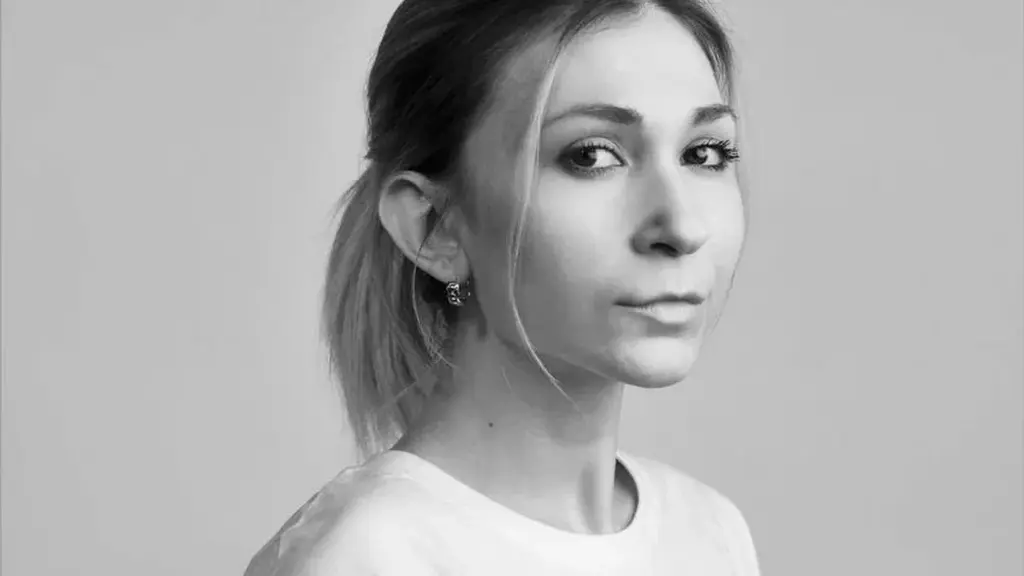
In memory of journalist Viktoria Roshchyna
Published on Oct 23, 2024
Ukrainian article of the week published in the 51th edition of the "What about Ukraine" newsletter on October 24th, 2024. The article was written by Viktoria Bega, deputy editor-in-chief of Hromadske and Khrystyna Kotsira, chief editor of Hromadske and was translated for n-ost by Natalia Volynets. Find the original article in Ukrainian here.
Former Hromadske journalist, 27-year-old Viktoria Roshchyna, died in Russian captivity last September. The occupiers claim this happened during her transportation from Taganrog on the Sea of Azov to Moscow.
Vika Roshchyna worked for Hromadske for over five years. She was a journalist who would not wait for an assignment from an editor. As soon as a critical event was taking place, Vika was there at once: at rallies, skirmishes, or murder sites. She took on the most challenging issues, loved anything concerning law enforcement, and attended scandalous and significant court sessions. Time and geography did not matter to her — at any moment, Viktoria was ready to go on a reportage even before she was told to. She took no days off, holidays, or sick leave.
From 2017 to 2022, Vika conducted dozens of live streams on Hromadske — near government buildings and courtrooms or while meeting national guardsman Vitalii Markiv in captivity and political prisoners Oleg Sentsov and Oleksandr Kolchenko — and she shot films, and wrote articles on a range of topics.
On 23 February 2022, Viktoria was in Shchastia, in the Luhansk region. She went there on the eve of the full-scale invasion, when she realised something was about to happen, and she needed to be close to the front line.
At the beginning of the full-scale war, Vika filmed videos and wrote articles from the hot spots in the east and south of Ukraine. In the first two weeks, she managed to file a report from Huliaipole, under constant fire at that time and in Zaporizhzhia, witnessing the Russians approaching, and she talked to evacuated Volnovakha residents, and told the world about the lives of people in temporarily occupied Enerhodar.
Then, Vika gathered material about the military operations in the Zaporizhzhia and Donetsk regions and planned to go to Mariupol to report on what was really happening in the besieged city.
On 16 March, we learned that, on her way to Mariupol, she was detained by Russians and imprisoned in a colony in temporarily occupied Berdiansk. She was released on 21 March. Vika wrote about that experience in a column titled ‘A week in occupiers’ captivity. How I got out of the hands of the FSB, Kadyrov’s soldiers and Dagestanis’. Immediately after her release, Vika wrote a story about Mariupol, using interviews with evacuated residents staying in Berdiansk.
Later, she started working as a freelancer for various newsrooms that allowed her more freedom in where she went and what she wrote about. She visited the occupied territories and filed reports from there.
On 3 August 2023, it was clear that Vika had gone missing in the temporarily occupied territories. Only in May 2024 did Russia confirm for the first time that they were holding her captive.
And on 10 October, we found out about her death. Petro Yatsenko, the spokesman of the Coordination Headquarters for the Treatment of Prisoners of War, said that Viktoria was being prepared for exchange, but “unfortunately, we were too late”. He added: “The fact that she was being transferred from Taganrog to Moscow was the stage of her preparation for release.”
We were truly looking forward to the day of Vika’s release — but now, there will be neither a livestream nor the story of a happy return.
However, we have hundreds of pieces of her work. This legacy meant a lot to her, and was both part of her life and a part of her identity.
This is a selection of her work:
Teenage offenders: correction not punishment
Shortly before the full-scale war, in January 2022, Vika published a film about teenage prisons, known as colonies.
In the film, she explored how staying in such institutions affected young males. She talked to convicted teenagers, those awaiting sentencing, and repeat offenders, as well as colony workers, volunteers, and psychologists.
Vika also worked on materials about a guy sentenced to six years for selling a few grams of cannabis, and a teenager accused of attacking relatives with a knife.
In 2021, Vika made a film about the psychological effects on military personnel once they return from the war, what the state does in this regard, and whether that offers enough support. In her work, she told the stories of Oleksiy Belko, who “mined” a bridge in Kyiv, Dmytro Balabukh, who stabbed a man at a bus stop, and Mykola Mykytenko, who set fire to himself in Independence Square in Kyiv. Vika tried to find an answer to the question of why soldiers returning from the war can heal physically,, but fail to do so psychologically, and why the war remains with them.
Vika was the first journalist to deal with the case of a boarding school in the Mykolaiv region, where in 2021 one of the underage female students was allegedly forced to have an abortion. The law enforcement officers opened a criminal case, the girl was sent to rehabilitation, while politicians and the children’s ombudsman representatives took the situation under their personal control.
However, the story did not end there. It triggered many graduates and former employees of the boarding school to openly speak about their troubles in the institution. Most of the female graduates talking to Vika compared the place to a prison: few people know what happens behind the closed doors of the school, so even the relevant authorities have a challenge to monitor its activities.
Kerch prisoners: a story of captured Ukrainian sailors
In this film, Viktoria reported on 24 Ukrainian sailors captured by the Russians near the Kerch Strait on 25 November 2018. They were kept in Russian prisons for months, and not recognised as prisoners of war, despite an order by the International Tribunal for the Law of the Sea to immediately release the soldiers. Vika followed their situation, communicated with the sailors’ relatives, went to Russian courts, spoke with lawyers, soldiers, and the prisoners of war themselves, and reconstructed the events in the strait. The film was shown in August 2019. On 7 September that year, Vika met the sailors in Boryspil, when they were released as part of a prisoner exchange
Where did the Handziuk case begin, or what is wrong with the Oleshky forest?
In spring 2018, a fire destroyed more than 600 hectares of the Oleshky forest in the Kherson region. At that time, Kherson mayor’s adviser and activist, Kateryna Handziuk, explained that the forest was being burnt, so the land could be sold. In July 2018, Handziuk was attacked, and in November she died from injuries. The prosecutor’s office then stated that the activist’s words about setting fire to the forest were the probable cause of the crime against her.
Since the attack on Kateryna, Vika Roshchyna closely followed the development of the case, talked to the victim’s father, and attended almost every court session.
Maidan: the legacy
From the beginning to the end of her work at Hromadske, Vika followed the story of the shootings on the Maidan square in January/February 2014. She produced materials about the Berkut “Black Company,” the kidnapping and torture of Maidan activists Ihor Lutsenko and Yuri Verbytskyi, and key verdicts in Maidan cases.
All the material by Viktoria Roshchyna is available here.
Cross-border and multiperspective reporting in your inbox
A monthly overview of project news, selected queer stories and job opportunities. At the moment focused on History Unit, a project about the persecution of queer people under National Socialism and today.

A daily roundup of European media debates, available in English, German, French, Russian, and Turkish.

The Eurasian Climate Brief is a podcast focusing on climate news in the region stretching from Eastern Europe, Russia down to the Caucasus and Central Asia.

Weekly insights on the war against Ukraine discussed in European media, debunking disinformation, and spotlighting key narratives and voices from Ukraine.

Communicating Climate in Central Asia curated this newsletter. A monthly newsletter dedicated to strengthening climate journalism and communication across EECCA region.